Masterclass
Beyond the Poll: Closing the Active Learning Gap
Interactive tools are judged on participation. Learning is not the same thing. A lecture hall where everyone answers the poll can still be a lecture hall where few people think. Active learning is where judgement and critical thinking actually get trained, which is precisely what higher education owes students in 2026. What stands in the way, however, is that an active method does not make everyone active. In a large lecture hall, only a handful of students can ever speak. Some follow in a second language. Some live with a disability. Some need a different pace. This session works through what Universal Design for Learning and tech, including AI, can do about these barriers. You will leave with what the room surfaces and the answers it brings, not only ours. Tobias Ortelt, Coordinator of Digital Teaching at TU Dortmund University, will show what this look like in practice by sharing ground-level insights, practical lessons, and strategies tested across a large public university.
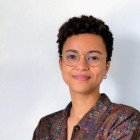
Arlène Botokro
Head of Learning Innovation, Wooclap
Arlène Botokro is Head of Learning Innovation at Wooclap, where she helps higher education institutions and corporate L&D teams design active learning experiences that bridge pedagogy, technology, and real-world practice. She leads strategic initiatives to embed research-based approaches into Wooclap and Wooflash, working closely with educators, learning technologists, and researchers.
Before joining Wooclap in 2020, she worked at Sciences Po and in innovation consulting for the publishing sector. Her international background across the US, France, and Ghana spans learning design, educational technology, and digital practices.

Tobias R. Ortelt
Head of Division Coordination Digital Teaching, Center for Higher Education at TU Dortmund University
Tobias R. Ortelt is a researcher and Coordinator for Digital Teaching at TU Dortmund University (Centre for Higher Education). His work focuses on the design and implementation of digital and remote laboratories, AI-supported teaching and learning, and the pedagogical integration of emerging technologies into higher education.
He has more than ten years of experience in the development and evaluation of digital learning environments and is actively involved in national and international research projects on digital education. Since 2023, his work has increasingly focused on the effective and responsible use of generative AI in teaching, learning, and assessment. His research interests include AI literacy, constructive alignment, learning analytics, and the design of technology-enhanced learning environments.