How To How To
From Framework to Floor: A Working Session with the AI Strategy Compass
Institutions often have AI frameworks but struggle to turn them into day-to-day decisions. In this hands-on How To session, you’ll use the AI Strategy Compass to assess where your institution currently stands, identify gaps and decide where to begin. Participants work through implementation choices, compare patterns and leave with an action plan based on their own institutional context.
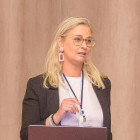
Ines Springael
Programme Lead CT/AI, Breda University of Applied Sciences
Ines Springael is Programme Lead CTL/AI at Breda University of Applied Sciences (BUas) in the Netherlands, where she leads the institution's AI strategy and coordinates the Centre for Teaching and Learning & AI . She developed the AI Strategy Compass, a framework now used across BUas to guide institutional AI implementation, and led the university's institution-wide AI programme, reaching approximately 7,500 staff and students.
Ines is a co-founder of TLWAI Europe and active in international networks including AIEOU Oxford, where she contributes to work on governance, policy, and systems design in AI and education. She is also part of the IEEE P7023 working group, contributing to the development of the IRIS standard for human-AI interaction readiness.

Rutger Thielen
AI Curriculum Coordinator, Breda University of Applied Sciences (BUas)
Rutger Thielen is AI Curriculum Coordinator at the Centre for Teaching and Learning (CTL-AI), Breda University of Applied Sciences (BUas), in the Netherlands. He leads a training team and safeguards an institution wide AI curriculum for teachers, researchers and operational staff, working on curriculum governance, learning outcomes and AI competency frameworks.
His work is grounded in the idea that lasting change in education starts with the conditions people learn and work in, not with the content itself. Drawing on systems thinking and organisational learning theory, he positions CTL-AI as a driver of organisational change rather than a purely training focused unit.
Rutger brings over two decades of experience in logistics education, facilitation and lean methodology. He combines this practical grounding with an ongoing academic interest in cognitive modifiability, andragogy and complexity theory, applied to how organisations adopt and adapt to AI.