Friday Plenary
After the Reset: Who Are We Becoming?
Start Friday at OEB with an inspiring plenary exploring some of the key questions shaping the future of education, learning and academia. Join us for a thought-provoking opening to the second conference day, bringing together fresh perspectives and ideas for what comes next.
More details about the plenary and its speakers will be announced shortly.

Helen Beetham
Lecturer in Digital Education, University of Manchester
Dr Helen Beetham is a researcher, writer and consultant in digital education. She has edited a number of standard texts, including Rethinking Pedagogy for a Digital Age (Routledge), and has published peer-reviewed articles on topics ranging from digital literacy to surveillance pedagogies, and from curriculum practice to feminist theories of technology.
Helen has advised universities in the UK, Europe, Africa and Australasia on their digital education strategies and has worked for international organisations such as the EU, UNICEF, UNESCO and the Commonwealth of Learning. Since 2004, she has played a leading role in Jisc programmes, building capacity for digital transformation in UK universities and helping to centre the student learning experience in that strategic work.
Her Digital Capabilities framework is widely used in the UK and beyond, including in universities, healthcare settings and libraries. She has developed and taught on Master’s programmes in digital education, including at the University of Manchester, where she now works. Since 2023, she has written the AI-critical Substack Imperfect Offerings.
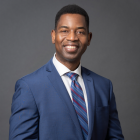
Gregory Fowler
President, University of Maryland Global Campus
President Gregory W. Fowler, PhD, is a visionary leader in global higher education, committed to advancing educational access for adult learners.
Now in his sixth year as president of University of Maryland Global Campus (UMGC), he has led a comprehensive transformation of the university ecosystem, from recruiting and support services to course design, space utilization, partnerships, institutional effectiveness, and more. By leveraging artificial intelligence and data science, he is creating an institution that thrives in volatile markets. Under his leadership, UMGC emerged from the global pandemic and entered a period of robust growth, serving 100,000 learners in a single year for the first time. This expansion led to the opening of new national and overseas locations. Persistence and success increased as well, with the university granting a record 16,108 credentials in FY 24 and 19,330 in FY 25. Previously, as a board member and commissioner of the New England Commission of Higher Education (NECHE), Fowler co-chaired the team responsible for the future of post-pandemic remote postsecondary learning experiences. As a two-time Fulbright Senior Scholar, he assessed the impact of the Bologna Accords.
He currently serves on the governing board of the Presidents Forum, the ASU-GSV Higher Education Insights Board, the Executive Board of the Consortium of Universities of the Washington Metropolitan Area, and CareFirst BlueCross BlueShield Board of Directors.
Prior to his tenure at UMGC, he served as president of Southern New Hampshire University Global Campus and held senior positions at Western Governors University. A graduate of Morehouse College, Fowler was a Charles A. Dana Scholar at Duke University and has been a featured higher education leader at Harvard’s Graduate School of Education, as well as completing leadership and negotiation training at Harvard’s Business School. He holds master's degrees from George Mason University and Western Governors University and a PhD from the State University of New York (SUNY) at Buffalo.

Annasofie Wædeled-Møller
Head of Education, Greenland Business School – Niuernermik Ilinniarfik
Annasofie Wædeled-Møller is Head of Education at Greenland Business School – Niuernermik Ilinniarfik in Nuuk, Greenland. Her work is centred on the role of educational institutions and educators in a digital age, and on the transition from educator-centred to learner- and practice-centred education.
Her perspective is shaped by her work in Greenland and by extensive experience with the Danish and Swedish Defence. Defence taught her that capability is collective; Greenland sharpened her understanding of community as an orientation, not just a resource.
A central question in her work is how education can reclaim and take responsibility for its formative role, and what this means for educational institutions and educators in a digital age. Her work draws on Reflective Practice-Based Learning, Self-Determination Theory, psychological safety, transformative learning and Bildung.
Moderator

Margaret Korosec
Director of Digital Education and Learning Innovation, University of Leeds
Dr Margaret Korosec is a senior leader in digital education recognised for shaping open, online, flexible, and digitally enabled learning at institutional scale. She currently serves as Director of Digital Education and Learning Innovation at the University of Leeds, where she leads the strategic alignment of partnerships, capabilities, and institutional enablers that strengthen student education and the digital student experience. Previously Dean of Online and Digital Education, she led the growth of the University’s online degree and flexible learning portfolio, widening participation for diverse learners. Before joining Leeds, Margaret held leadership roles at the University of Derby Online Learning and Western Governors University in the United States, helping to expand online degree provision and deepen her commitment to accessible, high-quality education. She is a Fellow of CODE at the University of London and a Board Member of the International Council for Open and Distance Education.