Boardroom Dialogue
Social Learning through Badges & Channels in a Global LMS
Date Thursday, Dec 4 Time – Room: Köpenick I
Cultural differences determine the use of social features—particularly badges (digital credentials) and channels (topic-based communities)—within a global Learning Management System to enhance engagement, build learning culture, and drive performance outcomes. This session should foster an understanding of the importance of culture, encourage participants to share experiences and surface practical strategies.
High-level outcomes:
• A shared understanding of cultural differences
• A shared understanding of how digital badges and learning channels can support social learning.
• Practical ideas they can apply in their own global LMS environments
• Connections to fellow professionals with similar interests and challenges
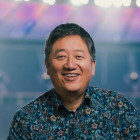
Shih-Wei Lo
Senior Product Owner Global LMS, Ottobock SE & Co. KGaA
Shih-Wei Lo has been working at Ottobock, the world market leader in prosthetics, for over 8 years in various positions on the topic of digital learning. Before that, he worked for several years as a special needs teacher and trainer for a subsidiary company of the city of Göttingen.
Shih-Wei Lo is a certified business economist (IHK) and has completed his BA in Business Administration (with a focus on Service & Intercultural Management) and his MA in Business Administration (with a focus on Marketing) while working. In addition, he holds a MSc in Business Informatics. He has always continued his education and has taken other certificates/continuing education such as Certified European E-Learning Manager (CELM), Train-the-e-trainer, learn coach, etc.
Lifelong learning is not a phrase for him, he lives it and likes to share his knowledge and experiences to discuss, learn and develop.
Moderator

Nicola Vollmar
Member, International Council on Badges and Credentials (ICoBC)
Nicola Vollmar is employed part-time as a consultant for the design of scientific continuing education in a project of the Ruhr University Alliance (HAR) at the Dortmund University of Applied Sciences, where she was also jointly responsible for format and module development at the Institute for the Digitisation of Working and Learning Environments (IDiAL).
Career and main occupation:
She previously worked in Germany and abroad, as well as in an international context at the United Nations. She started working as an English lecturer in 2003, combining this with her experience from her previous employment as a freelancer in adult education. Today, she advises on the planning and implementation of new teaching and learning methods and compatible formats as a learning and development consultant, drawing on her additional qualifications as an expert in new learning technologies and a Certified European E-Learning Manager for meaningful and sustainable learning architectures and didactic concepts. To be able to work holistically in human resources development, she also specialised in leadership and management with an MA.